
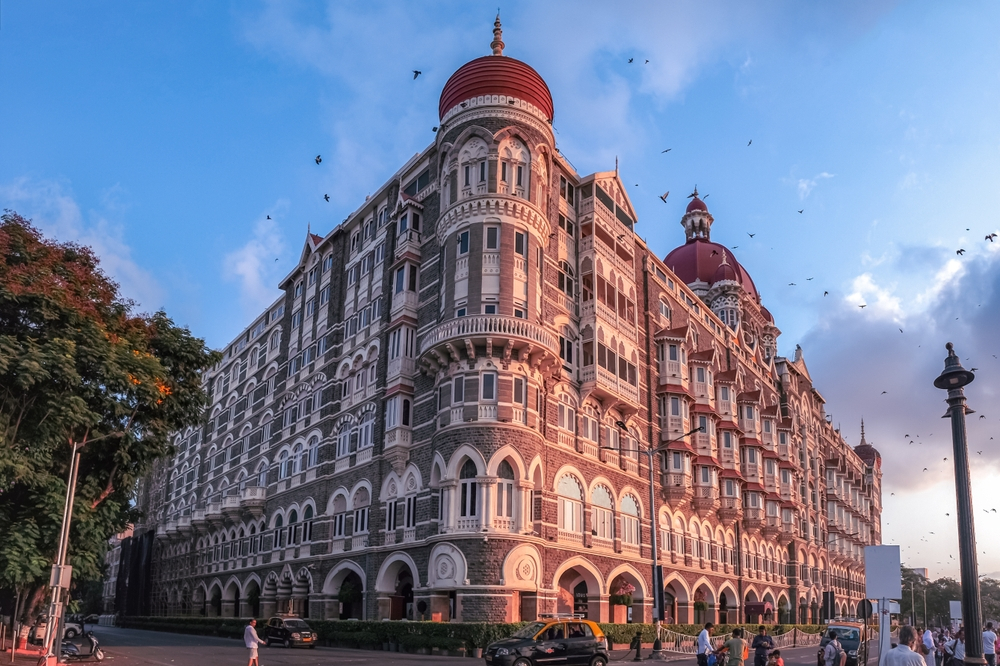
MBBS In Maharashtra
Pursuing an MBBS in Maharashtra is a dream for countless medical aspirants across India. Thanks to its high academic standards, modern infrastructure, experienced faculty, and extensive clinical exposure, the state has become a premier destination for medical education.
Maharashtra houses numerous prestigious government and private medical colleges that offer well-structured programs aligned with the evolving healthcare industry. From Mumbai and Pune to Nagpur and Chhatrapati Sambhajinagar (Aurangabad), students can access a wide range of top-tier institutions that provide excellent learning environments and robust career opportunities.
Whether you are a resident of Maharashtra or applying from another state, pursuing an MBBS here guarantees a powerful blend of academic excellence and hands-on clinical experience, helping students transform into highly capable healthcare professionals.
If you are looking for a medical degree that carries immense value, pursuing an MBBS in Maharashtra is one of the best paths you can take. The state has long been a top destination for future physicians, hosting some of the most prestigious and highly ranked medical schools in India.
This comprehensive guide covers everything you need to know about earning your MBBS degree in Maharashtra—from top-ranked universities and entrance exam requirements to the step-by-step application procedure and critical admission insights.
Earning an MBBS in Maharashtra opens the door to a deeply fulfilling career in the healthcare industry. The state remains a premier choice for aspiring doctors due to its world-class medical universities, a structured and transparent admissions process, and a diverse range of institutional options to fit different student profiles.
With the right preparation and a clear understanding of the admissions system, securing a seat at one of Maharashtra’s top medical colleges is an achievable goal—whether you are aiming for a government, private, or semi-government institution.
All About MBBS in Maharashtra
Pursuing an MBBS in Maharashtra is a 5.5-year journey—including a mandatory one-year rotatory internship—that thoroughly equips students with deep theoretical knowledge, essential clinical skills, and extensive real-world experience. With over 60 medical colleges spanning government, private, and deemed universities, Maharashtra stands as one of India’s leading hubs for medical education.
- Access to premier institutions like Grant Medical College, Seth GS Medical College, and BJ Government Medical College.
- Quality clinical exposure in multispecialty government and private hospitals.
- A wide variety of patient demographics enhances practical learning.
- Government support for medical infrastructure and research.
Facts about Maharashtra
| Category | Details |
|---|---|
| Capital | Mumbai |
| Area | 307,713 square kilometers |
| Population | Approximately 123 million (as of 2021) |
| Official Language | Marathi |
| Major Cities | Mumbai, Pune, Nagpur, Nashik, Aurangabad, Thane |
| Industries | Automobile (Pune, Nashik), textiles, pharmaceuticals, film, information technology (Pune, Mumbai). |
| Education | Popular for medical and engineering education. |
Highlight of the College
| College Name | Location | Type of Institution |
|---|---|---|
| Grant Government Medical College | Mumbai | Government |
| Seth GS Medical College | Mumbai | Government |
| BJ Government Medical College | Pune | Government |
| Dr. DY Patil Medical College | Pune | Private |
| KJ Somaiya Medical College | Mumbai | Private |
| Datta Meghe Institute of Medical Sciences | Wardha | Deemed |
| MGM Medical College | Navi Mumbai | Deemed |
Courses Offered
In the domain of MBBS in Maharashtra, the undergraduate medical program is the most sought-after. However, colleges also offer various postgraduate and diploma courses.
- Undergraduate Course:
- Postgraduate Courses:
- (1) MD (Doctor of Medicine)
- (2) MS (Master of Surgery)
- (3) PG Diploma courses in multiple specialties
Admission Procedure For MBBS in Maharashtra
Admission to MBBS in Maharashtra is based on the NEET UG (National Eligibility cum Entrance Test). The system is managed with the aid of the Directorate of Medical Education and Research (DMER), Maharashtra.
Step-by-Step Admission Process:
- Qualify NEET-UG: Students must clear the national-level NEET exam.
- Register for Maharashtra State Counseling: Through the official DMER website.
- Document Verification: Candidates are required to attend document verification rounds.
- Choice Filling and Seat Allotment: Based on NEET rank, choices filled, and seat availability.
- Seat Confirmation and Reporting: Confirm the seat and report to the allotted college.
Eligibility Criteria:
- Must have passed 10+2 with Physics, Chemistry, Biology, and English.
- Minimum 50% aggregate (40% for reserved categories).
- Must be NEET qualified.
For MD/MS
- The candidate should have completed a degree of MBBS in Maharashtra or any other state, but from an NMC-recognized medical college
- The candidate should have completed a mandatory 1-year Internship.
- The aspiring student should also have qualified NEET-PG Entrance Exam
- Eligibility criteria vary across different states and colleges. It is hence suggested to go through the official portals once.
Documents Required
For UG Candidates
- NEET UG Admit Card
- NEET UG Scorecard or Rank Letter
- Class 10 certificate and mark sheet (for date of birth)
- Class 12 certificate and mark sheet
- ID proof (Aadhar/PAN Card/Driving License/Passport)
- Eight passport-size photographs
- Provisional Allotment Letter
- Caste Certificate (if applicable)
- PWD Certificate (if applicable)
For PG Candidates
- MBBS Certificate.
- MBBS 3rd Part II mark sheet.
- Medical Registration Certificate.
- Internship Completion Certificate.
- Photo identity proof
- HSC mark sheet/ certificate
- NEET PG Score Card.
- Copy of Online Counseling Registration Certificate.
- Sponsorship Certificate from the State Govt. If applicable.
- Passport size Photographs 8 copies.
Course Structure and Details
The MBBS in Maharashtra curriculum is designed to produce competent and compassionate medical professionals.
Duration:
- 4.5 years of academic study
- 1-year compulsory rotating internship
MBBS Curriculum Breakdown:
| Phase | Duration | Subjects |
|---|---|---|
| Phase I | 1 Year | Anatomy, Physiology, Biochemistry |
| Phase II | 1.5 Years | Pathology, Microbiology, Pharmacology, Forensic Medicine |
| Phase III | 2 Years | Medicine, Surgery, Pediatrics, Obstetrics & Gynaecology, Orthopedics, ENT, Ophthalmology, Psychiatry, Dermatology |
Why Choose MBBS in Maharashtra
Choosing to pursue MBBS in Maharashtra gives quite some academic, expert, and lifestyle advantages. Here’s a detailed breakdown of why Maharashtra is a tremendous preference for MBBS aspirants:
1. High-Quality Medical Education
Maharashtra is home to top-ranked medical colleges such as:
- Grant Medical College, Mumbai
- BJ Government Medical College, Pune
- AIIMS Nagpur
- Seth GS Medical College, Mumbai
2. Excellent Clinical Exposure
- Cities like Mumbai, Pune, Nagpur, and Aurangabad have huge and numerous populations, ensuring students get a broad scientific education.
- Many schools are attached to heavily affected person-load hospitals, which means that hands-on experience in handling a huge range of clinical instances.
3. Career Opportunities & Post-MBBS Options
- Maharashtra has a big healthcare infrastructure, making it less complicated for graduates to discover internship and job possibilities.
- The presence of renowned hospitals (Tata Memorial, Kokilaben Dhirubhai Ambani, Lilavati, KEM) supports medical education and PG schooling.
- Better probabilities to put together for NEET-PG, INI-CET, and overseas scientific licensing tests (like USMLE, PLAB).
4. Cultural Diversity & Cosmopolitan Environment
- Maharashtra, specifically cities like Mumbai and Pune, offers a worldly lifestyle.
- Students from all over India and abroad come to look at here, leading to a wealth of cultural trade and inclusivity.
5. Good Infrastructure and Connectivity
- Efficient public transport in metro cities.
- Access to major airports and railways makes travel easy.
- Modern facilities in campuses: hostels, labs, libraries, sports, and tech-enabled classrooms.
Fees Structure
The Fee structure for MBBS in Maharashtra varies depending on whether or not the university is government, private, or deemed.
| Type of College | Annual Fees in INR (Approx) |
|---|---|
| Government Colleges | ₹ 1,00,000 – ₹ 1,25,000 |
| Private Colleges | ₹ 6,00,000 – ₹ 12,00,000 |
| Deemed Universities | ₹ 10,00,000 – ₹ 25,00,000 |
Scholarships
To aid meritorious and economically disadvantaged students, various scholarships are to be had for MBBS in Maharashtra.
- State Government Scholarships
- EBC (Economically Backward Class) Scholarship
- SC/ST/OBC Scholarships
- Minority Scholarships
- Merit-Based Private Scholarship
Top Private Medical Colleges in Maharashtra (MBBS)
1. Dr. DY Patil Medical College, Pune
Affiliation: Dr. DY Patil Vidyapeeth (Deemed University)
Location: Pimpri, Pune
Highlights:
- NAAC ‘A++’ grade
- State-of-the-art infrastructure
- Advanced simulation labs
- Recognized by NMC and MCI
2. Bharati Vidyapeeth Deemed University Medical College, Pune
Affiliation: Bharati Vidyapeeth (Deemed University)
Location: Pune
Highlights:
- NAAC ‘A+’ accredited
- Excellent academic track record
- Advanced library and e-learning tools
3. KJ Somaiya Medical College & Research Centre, Mumbai
Affiliation: MUHS, Nashik
Location: Mumbai
Highlights:
- One of the best private colleges under MUHS
- Good clinical exposure due to the Mumbai location
- Moderate fee structure
4. MGM Medical College, Navi Mumbai
Affiliation: MGM Institute of Health Sciences (Deemed)
Location: Navi Mumbai
Highlights:
- NABH-accredited hospital
- Good patient inflow
- Research-oriented approach
5. Krishna Institute of Medical Sciences (KIMS), Karad
Affiliation: Krishna Vishwa Vidyapeeth (Deemed University)
Location: Karad, Satara district
Highlights:
- UGC & NMC recognized
- Emphasis on rural healthcare and community medicine
6. Dr. Vasantrao Pawar Medical College, Nashik (VPMC)
Affiliation: MUHS, Nashik
Location: Nashik
Highlights:
- Private college under MUHS
- Decent academics and patient exposure
7. Jawaharlal Nehru Medical College, Wardha
Affiliation: Datta Meghe Institute of Medical Sciences (Deemed)
Location: Wardha
Highlights:
- Good infrastructure and teaching
- Located in a semi-urban region with high patient volume
Placement Highlights
While direct campus placements are not part of MBBS in Maharashtra, college students locate first-rate career paths, submit-internship, and put up-commencement.
Career Paths after MBBS:
- Junior Residency in Government/Private Hospitals
- PG Preparation (NEET-PG, INI-CET, USMLE, PLAB)
- Rural service (mandatory for some scholarships and government bond conditions)
- Army Medical Services
- Private Practice or Hospital Attachments
Infrastructure
Medical schools in Maharashtra are geared up with modern-day infrastructure to assist students with their MBBS in Maharashtra adventure.
Common Infrastructure Features:
- Well-equipped laboratories
- Digital classrooms
- Central and departmental libraries
- Dissection halls with cadaver access
- Simulation labs
- Hospital tie-ups for clinical practice
- Hostels with Wi-Fi and a mess
- Sports and recreation facilities
Conclusion
Choosing to pursue an MBBS in Maharashtra is a strategic decision for any aspiring physician, offering a powerful combination of academic rigor, extensive clinical exposure, and robust postgraduate opportunities. With a vast network of government, private, and deemed institutions, the state caters to a wide spectrum of student needs and budgets. Furthermore, Maharashtra’s highly developed healthcare infrastructure and experienced academic mentorship thoroughly prepare students for competitive PG exams and successful global careers.
Ultimately, earning an MBBS in the state stands as a definitive gateway to clinical excellence, medical innovation, and a fulfilling life of service to humanity. It remains a top-tier destination for future healthcare professionals who want to learn within a dynamic, high-volume medical ecosystem.